



What symptoms there are – and what those affected should look for in an office chair.
Many people today spend a large part of their day sitting down. For people with chronic spinal problems, this can quickly become a burden: tension, pain, exhaustion or the feeling of ‘never being able to sit properly’ are part of everyday life for them. The good news is that the right office chair cannot cure a condition, but it can provide noticeable relief and make sitting for long periods much more comfortable.
Common chronic spinal problems
Spinal complaints vary greatly. The most common include:
Scoliosis
A lateral curvature of the spine, often combined with a twist. It can be congenital or develop over the course of a lifetime. Typical symptoms include asymmetrical strain, rapid fatigue when sitting and localised pressure sensitivity.
Disc problems (protrusion, herniation)
Many sufferers are sensitive to rigid seating, overly soft cushions or a lack of support in the lumbar region.
Chronic back pain / non-specific back pain
No clear diagnosis, but with persistent symptoms – often exacerbated by prolonged, immobile sitting.
Hollow back (hyperlordosis) or rounded back (kyphosis)
Altered natural curves of the spine that require targeted but not rigid support.
Muscle tension and muscular imbalances
Often a consequence of poor posture, stress and lack of exercise – quickly intensify when sitting.
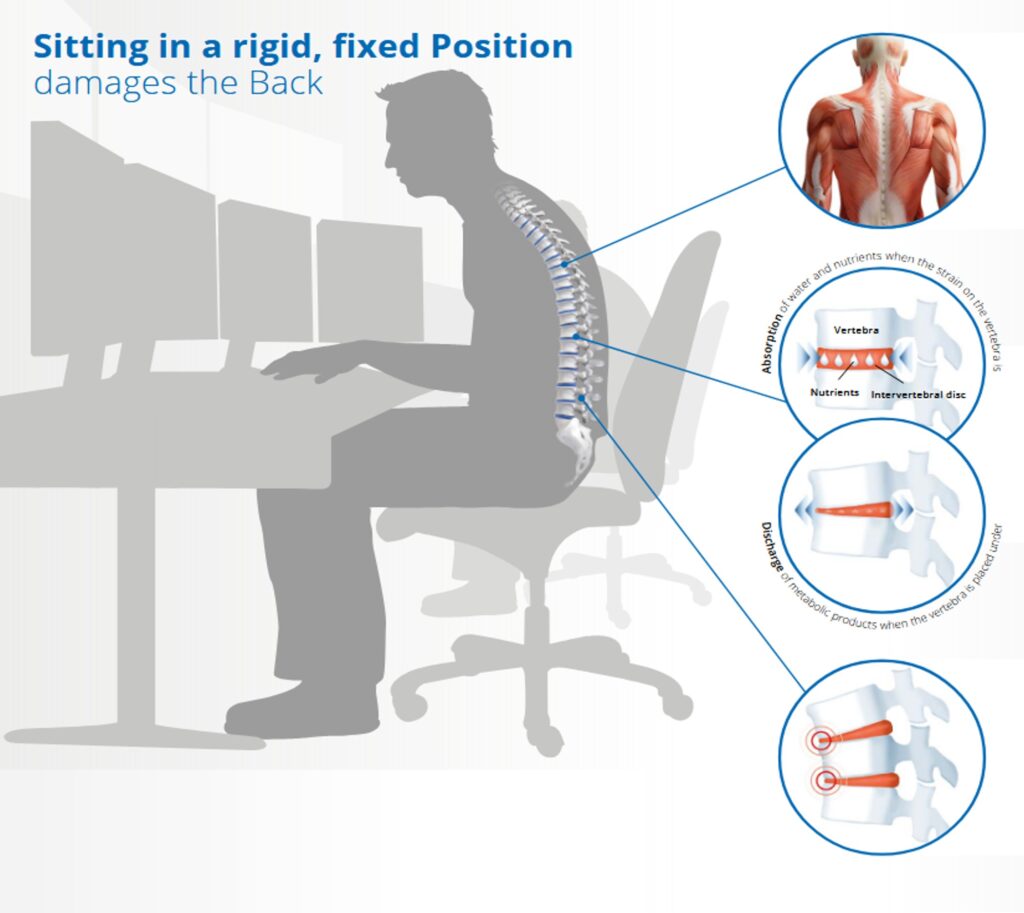
What they all have in common is that standard office chairs are often inadequate because they are not sufficiently adjustable or force the body into an uncomfortable position.
What makes a suitable office chair for those affected?
A good chair for people with spinal problems does not have to be medical, but intelligently ergonomic. Five points are particularly important:
1. Support instead of constraint
The chair should provide support without restraining the body. A good backrest supports the natural shape of the spine, but allows for individual deviations.
2. Relieving, shaping upholstery
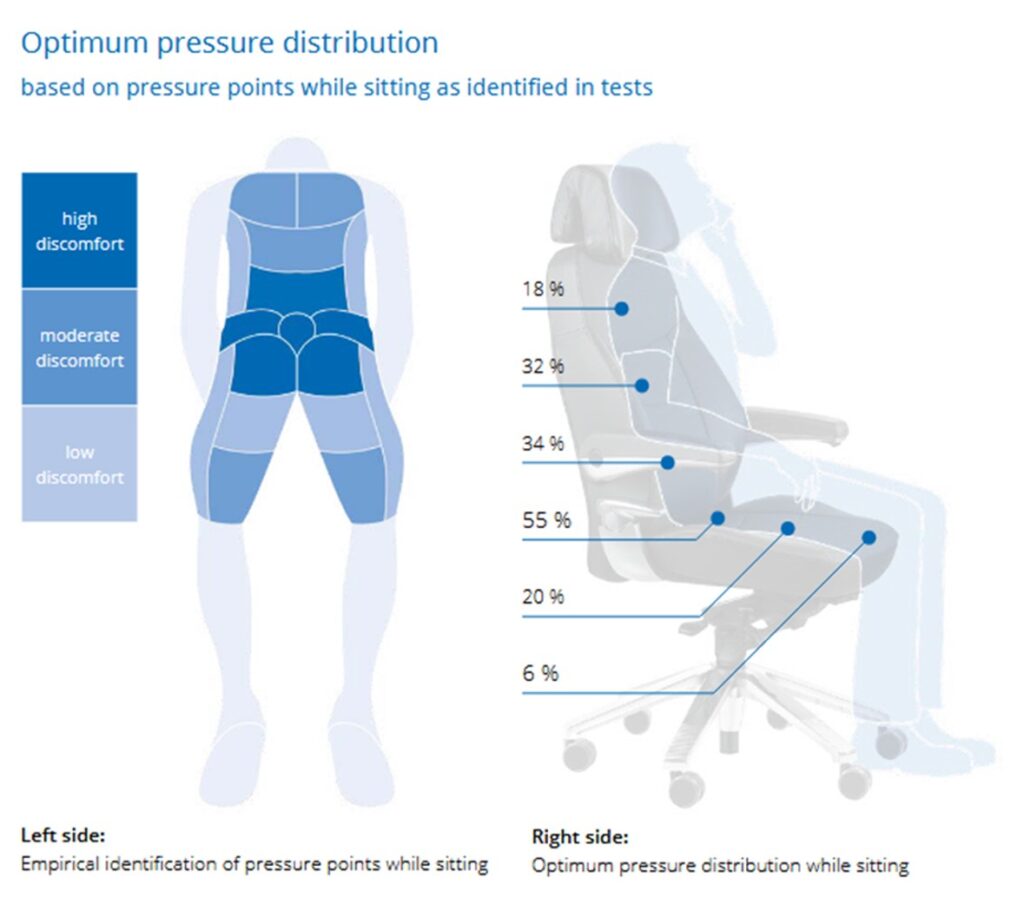
Very soft seats feel comfortable at first, but often cause you to ‘sink in’. Ergonomically shaped upholstery distributes pressure better, stabilises the pelvis and reduces point loads – especially in asymmetrical postures.
3. Adjustable lumbar support
For many people, the lower back is the most sensitive area. A height- and depth-adjustable lumbar support allows you to provide support exactly where it is needed.
4. Movement while sitting
Static sitting is particularly stressful for the spine. Good mechanics promote micro-movements, stimulate the muscles and prevent permanent one-sided strain.
5. Generous, intuitive adjustment options
Bodies are different – especially when it comes to spinal problems. Seat height, seat depth, backrest and armrests must be easy and sensitive to adjust, without complicated technology.
How a Svenstol chair can help
Svenstol develops chairs for long, concentrated periods of sitting – precisely where many people with spinal problems experience their greatest difficulties. The seating concept is not aimed at ‘therapy’ but at lasting relief in everyday life.
Supportive seating comfort for long periods
The ergonomically shaped cushions are designed to stabilise and remain comfortable at the same time – even after many hours. They distribute pressure evenly and prevent extreme sinking.
Lightweight lateral support without constriction
Many people, especially those with scoliosis or asymmetrical posture, find lateral support comfortable – as long as it is not restrictive. The cushions provide guidance but allow enough freedom for individual sitting positions.
Adjustable lumbar support
The lumbar support can be adjusted to different back shapes and provides targeted support for the lower back – without feeling rigid.
Movement-promoting active+ mechanism
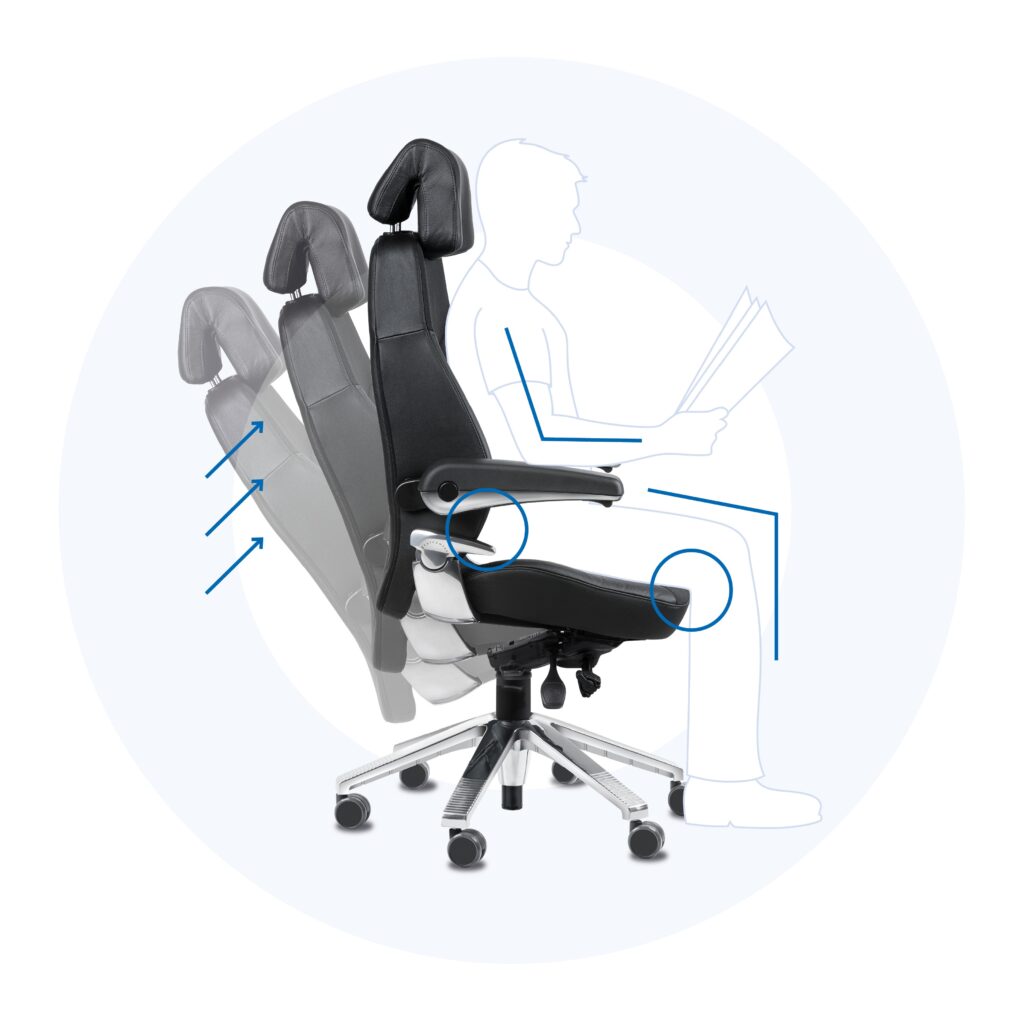
The active+ mechanism enables dynamic sitting: small movements, weight shifts and posture changes remain possible and desirable. This relieves pressure on the intervertebral discs and muscles alike.
Generous seat depth adjustment and intuitive adjustment
With up to 10 cm of seat depth adjustment and generously designed adjustment ranges, the chairs can be finely adjusted to different body proportions – a decisive advantage for people who cannot cope with standard sizes.

Conclusion:
Not a cure – but a noticeable difference
An office chair cannot ‘cure’ spinal disorders. But it can make everyday life considerably easier. For people with chronic back problems, a chair is good if it supports, relieves and allows movement – instead of correcting or fixing.
This is exactly where high-quality, ergonomically designed chairs come in: they adapt to the person – not the other way around.


